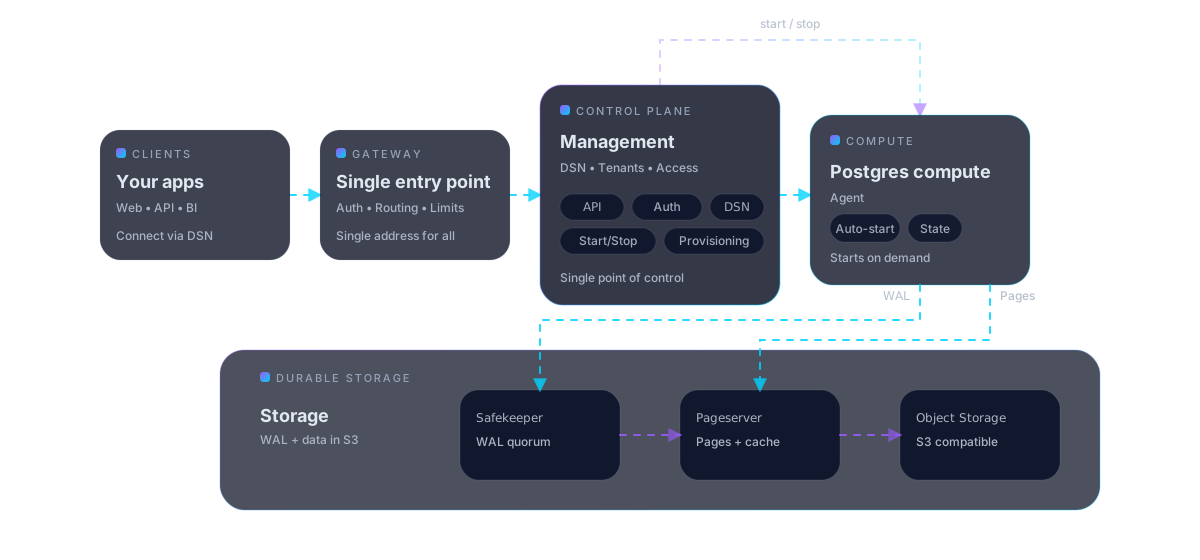
How SPG99 keeps one DSN and preserves durable state when compute stops
The core SPG99 pattern: a stable entrypoint, an independent compute lifecycle, and durable state outside the worker. That is what makes auto-start safe for applications.
This will not be a generic cloud talk or an interface walkthrough. Live on air, SPG99 will create a database in Console, connect through psql, show stopped → booting → ready, let the database return to idle, and then explain the controlled handoff between L1 and L2 writer profiles.
To make a serverless model operationally friendly, teams need to understand not only the savings but also the states themselves. In SPG99, it is usually enough to think in three modes: active, idle, and wake-up.
From the outside, SPG99 looks like regular PostgreSQL behind one DSN. Internally, the platform separates Gateway, Control Plane, worker, and durable storage, so compute can stop without changing the endpoint or losing data.
Temporary databases rarely need round-the-clock compute, yet traditional managed PostgreSQL keeps billing as if demand were constant. A serverless model wins when teams want to keep a normal DSN while removing idle-hours spend.